Knife Buying Guide: How to Choose the Right Knife
Buying a knife sounds simple until you start looking. There's blade steel, handle material, blade shape, size, price — and somewhere in all that, the thing you need to know is: for what are you going to use it?
That question decides everything else. A knife built for hunting doesn't work well in a kitchen. A folding knife meant for everyday carrying isn't going to manage heavy outdoor tasks. Different knives get designed around different jobs, and the materials and craftsmanship behind a knife matter just as much as which category it falls into.
This guide walks through how to think about a knife purchase — purpose first, then the details that follow from it — so you end up with something that fits how you'll really use it, not just something that looked good online.
Explore Our Knife Collection
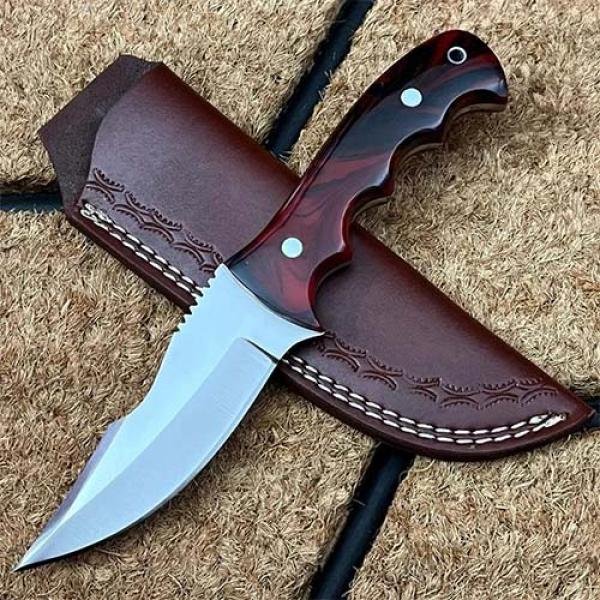
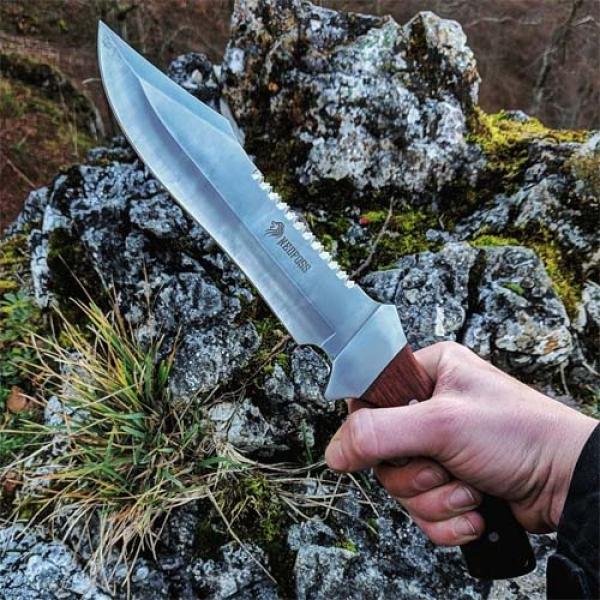
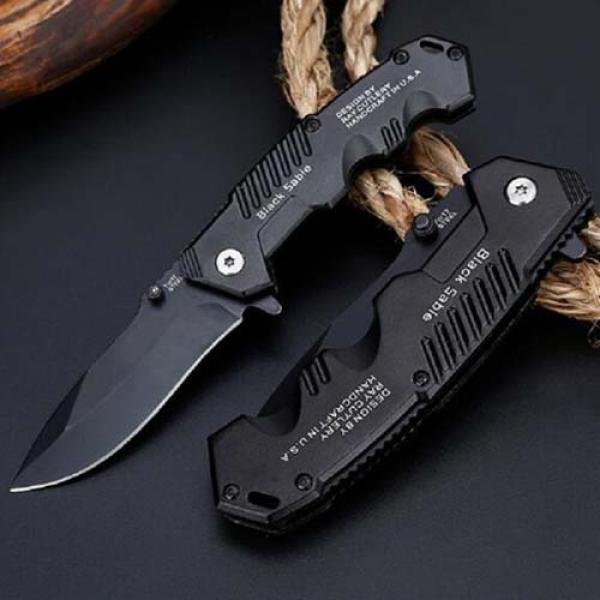
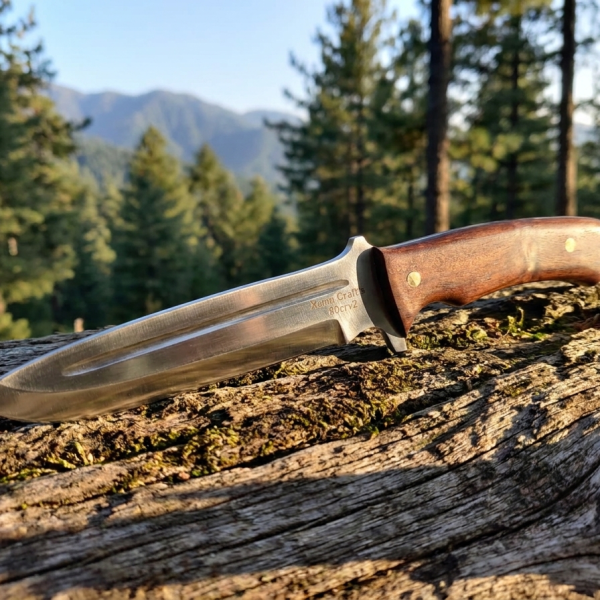
How to Choose a Knife
Figuring out how to choose a knife gets a lot easier once you break it into a handful of factors instead of trying to weigh everything at once.
Purpose comes first, always. What's this knife for? Cooking, hunting, everyday tasks, collecting — the answer here shapes every other decision that follows.
Knife type follows from purpose. A fixed blade suits different tasks than a folder. A kitchen knife looks nothing like a Bowie knife for a reason.
Blade material affects how the knife performs and how much upkeep it needs. Some steels prioritize edge retention, others corrosion resistance, others visual character.
Blade design — the actual shape of the edge and tip — changes what the knife is good at. A drop point behaves differently than a tanto.
Handle material decides comfort and grip, especially over long use. Wood feels different than G10, and both feel different than carbon fiber.
Size and weight matter more than people expect. A knife that's too heavy or too large for its job gets left in a drawer.
Maintenance requirements are worth thinking about honestly. Some knives need regular oiling and careful drying. Others are far more forgiving.
Working through these one at a time, starting with purpose, makes the rest of the decision a lot more straightforward.
Choose Based on Knife Purpose
Different tasks call for genuinely different knives and starting from what you'll use it for narrowing things down fast.
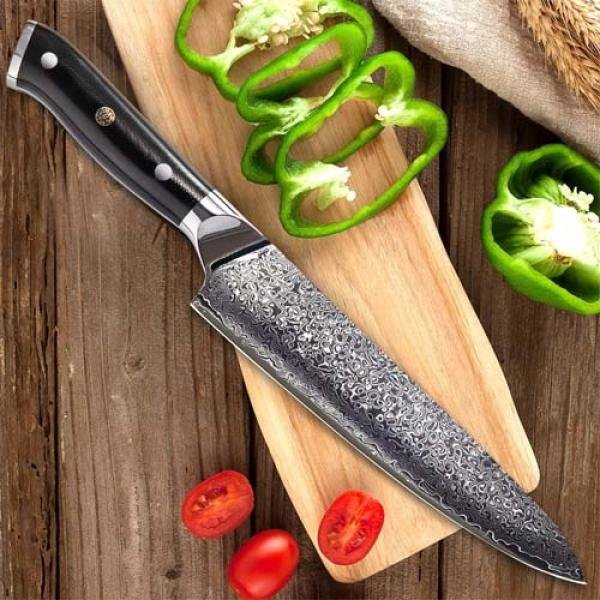
Kitchen Use. Anyone who cooks regularly wants a knife built for precision — controlled cuts, good balance, an edge that holds up through repeated use. Our chef knives and broader kitchen knives collection are built specifically around food prep, not general-purpose cutting.
Hunting & Outdoor Use. Field dressing, camping, general outdoor tasks — these need a knife that can take real abuse and keep working. Hunting knives and Bowie knives are both built with that kind of durability in mind, just with different blade profiles depending on the specific task.
Everyday Carry. Something compact, practical, and easy to carry without thinking about it. EDC knives, pocket knives, and folding knives all fit this category, and the right pick usually comes down to personal preference around size and opening style.
Collectors. For anyone buying primarily for craftsmanship, rarity, or display value, Damascus knives, custom knives, and swords tend to be where collectors spend the most time browsing.
Matching the knife to the purpose first saves a lot of second-guessing later.
| Purpose | Recommended Knife Type | Key Priority |
| Kitchen Use | Chef Knives, Kitchen Knives | Precision, balance, and edge control for accurate food preparation |
| Hunting & Outdoor Use | Hunting Knives, Bowie Knives | Precision, balance, and edge control for accurate food preparation |
| Everyday Carry (EDC) | EDC Knives, Pocket Knives, Folding Knives | Portability, convenience, and reliable daily use |
| Collectors & Display | EDC Knives, Pocket Knives, Folding Knives | Portability, convenience, and reliable daily use |
Why Quality Craftsmanship Matters
Good steel is only half the story. Two knives built from the exact same steel can perform completely differently depending on what happened to that steel on the way to becoming a blade.
Precision grinding is where a lot of that difference comes from. A blade ground unevenly cuts inconsistently no matter how good the underlying steel is, since the edge geometry itself is what determines how the knife performs in use. Proper heat treatment matters just as much, more — this is the step that decides whether a blade holds an edge and resists chipping or ends up either too brittle or too soft to perform reliably. Skip or rush this step and even premium steel underdelivers.
Blade geometry ties into both. The specific shape and thickness of the blade, beyond just the general profile, affects how well it balances cutting ability against durability for its intended task. And manage fit and finish round it out — a handle that's slightly off, whether too loose, too tight, or poorly shaped, undermines a knife's usability regardless of how good the blade itself is.
Quality inspection is what ties all this together. A knife that's been ground well, heat treated properly and fitted with a well-finished handle still needs a final check — blade alignment, edge sharpness, handle security, overall balance — before it's done. This is often the difference between a knife that looks right in photos and one that performs right in your hand, and it's a big part of why craftsmanship matters just as much as the materials list when you're choosing a knife.
Understanding Different Knife Types
Beyond purpose, it helps to understand what each broad knife type is best suited for.
Fixed Blade Knives. No folding mechanism, which means more strength and less to maintain. Best for hunting, general outdoor use, and heavier-duty tasks where a folding joint would just be a weak point.
Folding Knives. Compact and easy to carry since the blade folds into the handle. Best for portability and everyday carry, where convenience matters more than raw toughness.
Kitchen Knives. Built around precision rather than durability in the outdoor sense. Best for food preparation, where balance and edge control matter more than surviving rough handling.
Custom Knives. Built entirely around a specific person's preferences rather than a general category. Best for unique designs and personalized projects, where off-the-shelf options don't quite fit what someone wants.
None of these types is objectively better than the others. They're just built for different jobs, and picking the right one starts with being honest about what job you need done.
| Knife Type | Best For | Trade-Off |
| Fixed Blade Knives | Hunting, bushcraft, camping, and heavy-duty outdoor tasks | Stronger construction but less portable, as they require a sheath |
| Folding Knives | Everyday carry, travel, and general utility | More compact but typically not as robust as fixed-blade knives |
| Kitchen Knives | Food preparation, slicing, chopping, and precision cutting | Optimized for kitchen use rather than rugged outdoor applications |
| Custom Knives | Personalized designs, collector pieces, gifts, and specialized use | Made to order, so production takes longer than ready-made knives |
Choosing the Right Blade Steel
Blade steel affects sharpness, durability, and how much maintenance a knife will realistically need. A few categories cover most of what's available.
Damascus Steel
Known for unique, one-of-a-kind patterns and the premium craftsmanship behind producing them. A strong pick for anyone who values collectors appeal alongside genuine cutting performance.
Carbon Steel
Offers excellent edge performance and takes a very sharp edge. It's a traditional knife-making material for a reason — it just needs more regular care to avoid moisture-related issues.
Stainless Steel
The low-maintenance option. Strong corrosion resistance and easy upkeep make it a practical choice for kitchen knives and everyday carry, where convenience matters as much as edge retention.
There's no universal "best" steel here. It comes down to whether appearance, edge performance, or ease of maintenance matters most for how the knife will be used.
Understanding Blade Shapes
Blade shape has a real effect on what a knife is good at, beyond just how it looks.
Drop Point. A versatile, all-purpose shape with a strong tip and a curved edge. It is common on hunting knives and general-purpose blades because it manages a wide range of tasks well.
Clip Point. Features a concave curve near the tip, giving more control for detail work. Popular on Bowie-style knives and knives meant for both utility and fine cutting tasks.
Tanto. A strong, angular tip built for piercing and heavy-duty use. Less common for everyday slicing tasks, more suited to knives that need serious tip strength.
Straight Edge. A simple, continuous edge without serrations. Easier to sharpen and maintain, and the most versatile option for everyday cutting.
Spear Point. A symmetrical blade with a centered point, often seen on fixed blades and some collector pieces. Good for piercing and controlled cutting alike.
The right shape really depends on what the knife needs to do most often — general use calls for something different than heavy piercing tasks or detailed slicing work.
Choosing the Right Handle Material
The handle affects grip, comfort, durability, and how the knife holds up over years of use, and different materials bring different trade-offs.
Wood handles offer a classic, natural look and a warm feel in the hand. They need a bit more care than synthetic options, since wood can be affected by moisture over time, but many people prefer appearance, and character wood develops with age.
Micarta is a composite material known for durability and a secure grip, even when wet. It holds up well under heavy use and requires extraordinarily little maintenance, which makes it popular for knives meant for real outdoor work.
G10 is another composite, like Micarta in durability but often lighter. It resists moisture well and holds texture for grip, making it a common choice for EDC and hunting knives where reliability matters more than aesthetics.
Carbon fiber brings a lightweight, modern look along with strong durability. It's a popular choice for knives where reducing weight matters, though it tends to sit at a higher price point than wood or basic composites.
Bone and antler, where available, offer a distinctive, traditional appearance, often chosen for collector pieces or knives meant to have real character. They need a bit more care than synthetic materials but hold real appeal for anyone who values that natural, handcrafted look.
Grip, durability, appearance, and maintenance all trade off against each other here. There's rarely a single "best" handle material — just the one that fits how the knife will be used and how much upkeep someone's willing to put in.
Handmade vs Mass-Produced Knives
Both handmade and factory-produced knives have a place, and understanding the difference helps set the right expectations.
Handmade Knives. The appeal here comes down to craftsmanship — genuine attention to detail at every stage, designs that can be fully unique rather than repeated thousands of times, and materials chosen deliberately rather than picked for cost. A handmade knife tends to feel more considered because it usually is.
Factory Knives. The main advantages are lower cost and consistent production. When a knife needs to be affordable and reliably identical across a large batch, factory production makes sense, and there's nothing wrong with that for a lot of everyday uses.
Handmade knives tend to appeal most to collectors and enthusiasts specifically because of what factory production can't offer: individuality, visible craftsmanship, and materials selected with a particular purpose in mind rather than the lowest viable cost. Neither approach is wrong. It's really about what someone's looking for in a knife.
Knife Buying Tips
A few practical habits make the whole buying process easier, whatever knife you end up choosing.
Buy based on intended use first, every time. It's tempting to get pulled in by an interesting design, but a knife that doesn't fit the job ends up disappointing no matter how good it looks. Consider maintenance needs honestly too — a stunning Damascus blade that never gets properly dried and oiled won't stay stunning for long.
Choose quality over unnecessary features. A knife loaded with extras but built from weak materials isn't a better buy than a simpler knife made well. Check materials and craftsmanship directly where possible, rather than relying purely on marketing descriptions. And think about long-term value, not just the upfront price — a well-made knife that lasts fifteen years is often a better deal than three cheaper knives bought to replace each other over that same span.
Common Knife Buying Mistakes
A handful of mistakes show up again, and most are avoidable once you know how to watch them.
Choosing based only on appearance is the most common one. A knife can look incredible and still be the wrong tool for the job. Buying the wrong knife type entirely — a display piece for heavy outdoor work, or a fixed blade for something that really calls for a folder — leads to disappointment fast. Ignoring maintenance requirements is another; some knives genuinely need more care than others and skipping that reality leads to a blade that degrades faster than it should.
Selecting poor materials to save money upfront often costs more overall, since a knife built from weak steel or a flimsy handle rarely lasts. And choosing the wrong size — too heavy, too large, too small for the intended task — is an easy mistake to make without managing the knife first, whether in person or through careful research.
Knife Buying Checklist
Before buying, it helps to run through a short list rather than relying on memory alone.
- Intended use — what will this knife be doing?
- Blade type — fixed, folding, or something more specialized?
- Steel type — Damascus, carbon, or stainless, based on what matters most for the job?
- Manage material — wood, Micarta, G10, carbon fiber, or something else?
- Size and weight — does it match how and where it'll be used?
- Maintenance requirements — how much upkeep are you willing to commit to?
- Budget — what's a reasonable range given the intended use and expected lifespan?
Running through this list before buying takes a few minutes and saves a lot of regret afterward.
Frequently Asked Questions
How do I choose the right knife?
Start with intended use, since that decision shapes everything else — blade type, steel, handle material, and size all follow from what the knife needs to do.
What type of knife should I buy first?
For most people, a versatile EDC or folding knife makes a good starting point, since it covers a wide range of everyday tasks before moving toward more specialized knives for specific purposes.
Is Damascus steel worth buying?
For many buyers, yes, particularly if craftsmanship, unique appearance, and collector value matter alongside cutting performance. It does require a bit more maintenance than some other steel, which is worth factoring in.
Are handmade knives better?
Not universally "better," but they offer craftsmanship, unique designs, and material selection that factory knives can’t match. Factory knives make more sense when cost and consistency matter more than individuality.
What knife is best for beginners?
A simple, versatile knife with straightforward maintenance, like a basic EDC or folding knife, is usually the easiest starting point before branching into specialized types.
What blade steel should I choose?
It depends on priorities. Damascus for appearance and craftsmanship, carbon steel for edge performance, or stainless steel for low-maintenance reliability — the right pick depends on what matters most for how the knife will be used.
How much should I spend on a quality knife?
It varies by knife type and intended use, but a good rule of thumb is weighing long-term value against upfront cost. A well-made knife built to last often works out cheaper over time than repeatedly replacing lower-quality options.
Find the Right Knife for You
Choosing a knife doesn't have to be complicated once you start from purpose and work outward from there. Blade type, steel, handle material, size — each decision gets easier once the first one is settled.
If you're ready to see how these factors come together in an actual knife, our collections cover everything from everyday carry to fully custom builds.
Latest Posts